SBSanta Barbara
Field Guide

Local knowledge · thoughtfully edited

← The Natural World

Garden, canyon & coast

Butterflies of
Santa Barbara

Eight familiar butterflies—and the plants, places, and small behaviors that help you notice them.

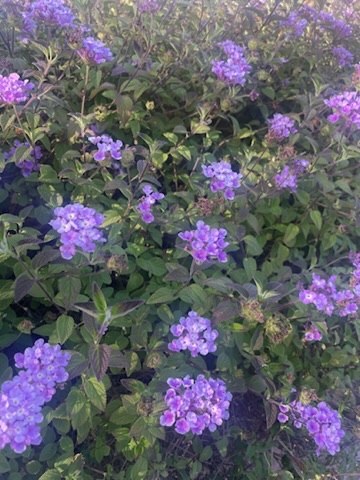
Purple trailing lantana flowers photographed by Stuart Schonwetter
A place to pause. Trailing lantana can provide nectar for visiting butterflies.Photograph by Stuart Schonwetter

A year of looking

When should I watch?

  1. Winter

    Look for overwintering monarchs only from respectful distances; warm days can still bring activity.

  2. Spring

    Fresh plant growth supports caterpillars, while adults begin moving through gardens and open spaces.

  3. Summer

    Warm, calm mornings can bring the widest variety to flowering gardens, creeks, and canyon edges.

  4. Fall

    Migrants and late-season nectar visitors make this an especially rewarding time to watch.

These are observation patterns, not a live sighting forecast. Weather, habitat, and year-to-year conditions matter.

The Good Land · Goleta

Ellwood Mesa
and the monarchs.

Goleta’s Butterfly Grove is part of the Ellwood Mesa/Sperling Preserve—an important winter shelter for western monarchs and one of the area’s defining natural places.

Season
Monarchs generally arrive in fall and disperse by spring. Numbers change dramatically from year to year.
The experience
The main viewing area is reached on foot through natural terrain. Bring binoculars; clusters may be high in the canopy.
Before you go
Conditions, active restoration work, trail guidance, and seasonal counts can change. Check the City’s visitor page first.
The quick collection

Start with eight.

Color is only the beginning. Notice size, flight, wing shape, nearby plants, and whether the butterfly pauses or keeps moving.

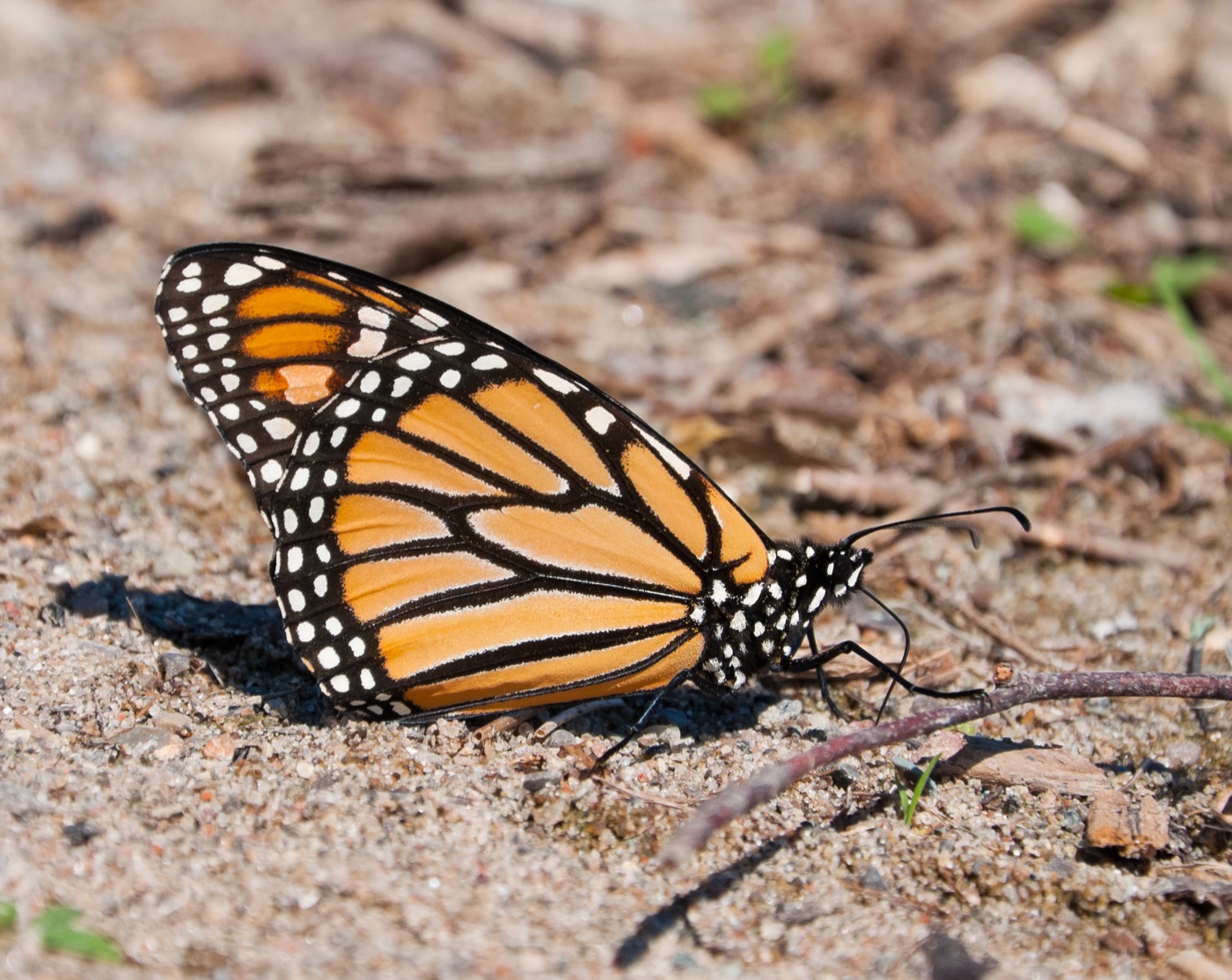
Side view of an orange and black monarch butterfly resting on the ground
Photo: Paolo Costa Baldi / Wikimedia Commons · CC BY-SA 3.0
01

Goleta grove, coast & gardens

Monarch

Danaus plexippus

Large orange wings crossed by strong black veins and edged with white dots. At Ellwood, look high into sheltered trees for winter clusters.

Caterpillar host
Milkweeds—breeding habitat, generally inland
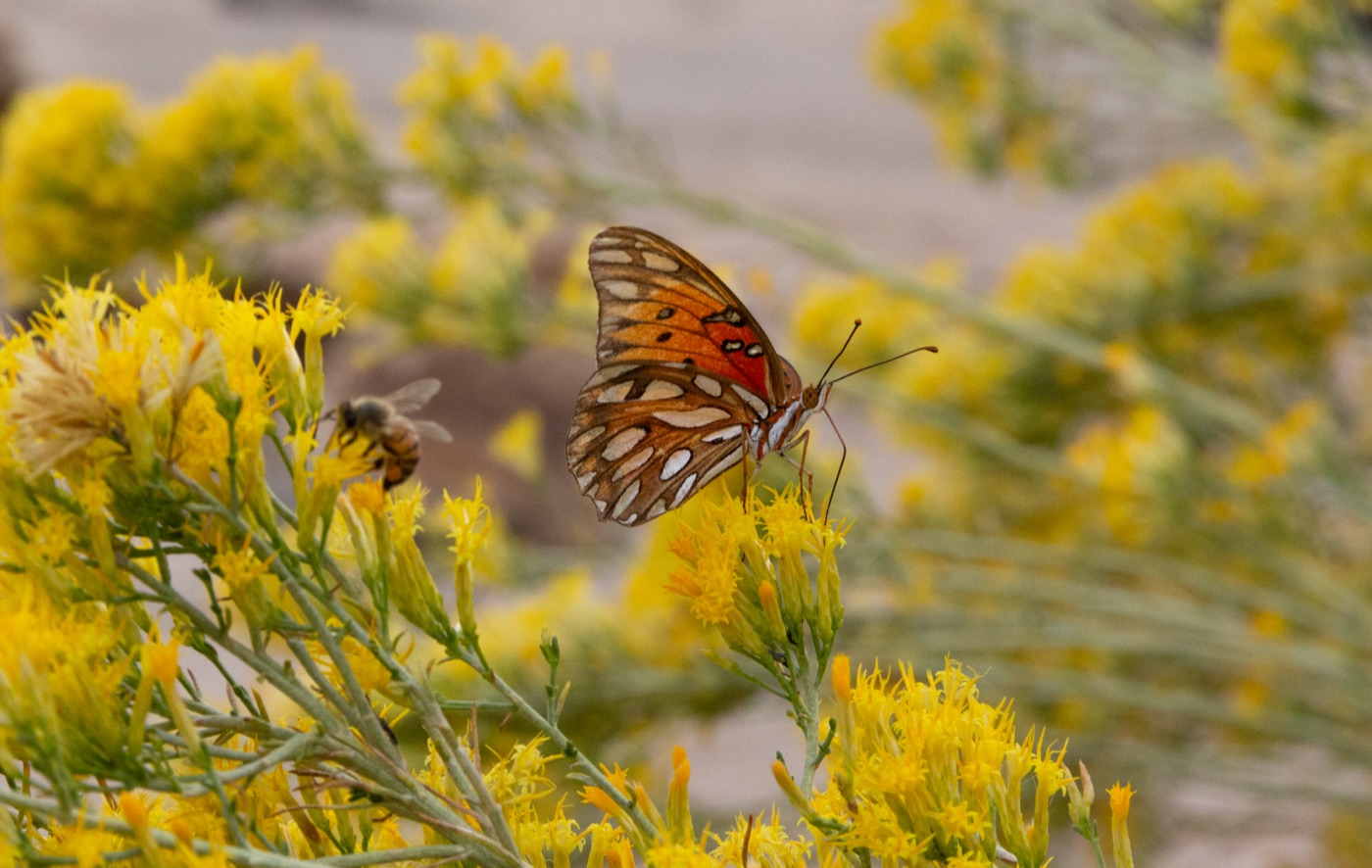
Gulf fritillary showing silver-spotted underwings while feeding on yellow flowers
Photo: NPS / Bill Bjornstad / Wikimedia Commons · Public domain
02

Gardens & sunny edges

Gulf fritillary

Dione vanillae

A brilliant orange butterfly in flight; when it closes its wings, large reflective silver spots become the giveaway.

Caterpillar host
Passionflower vines
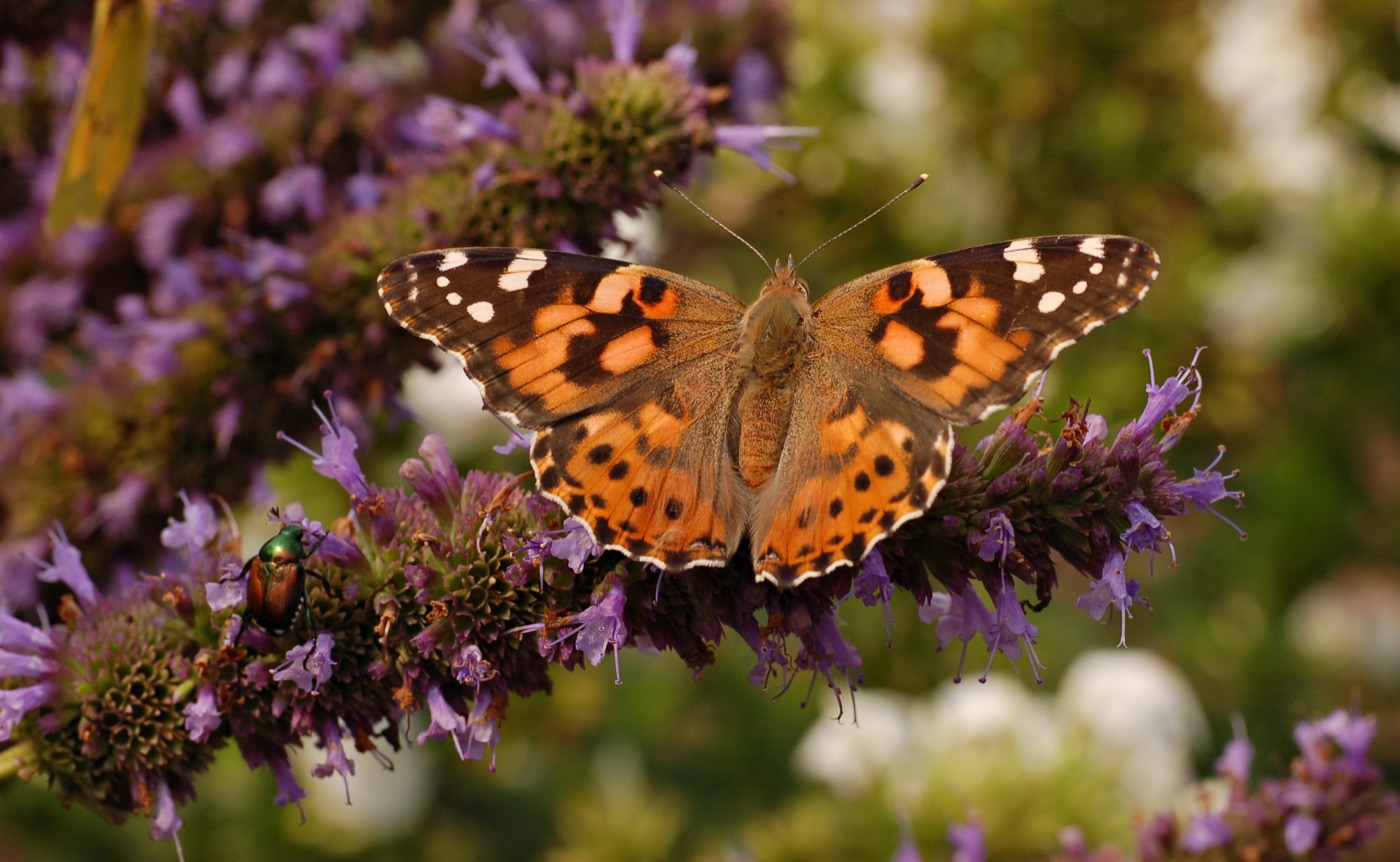
Painted lady butterfly with open orange, black, and white patterned wings
Photo: Derek Ramsey / Wikimedia Commons · GFDL 1.2
03

Open ground & gardens

Painted lady

Vanessa cardui

Orange-brown above with black-and-white forewing tips. Its quick, purposeful flight can appear in sudden seasonal waves.

Caterpillar host
Thistles, fiddleneck & mallows
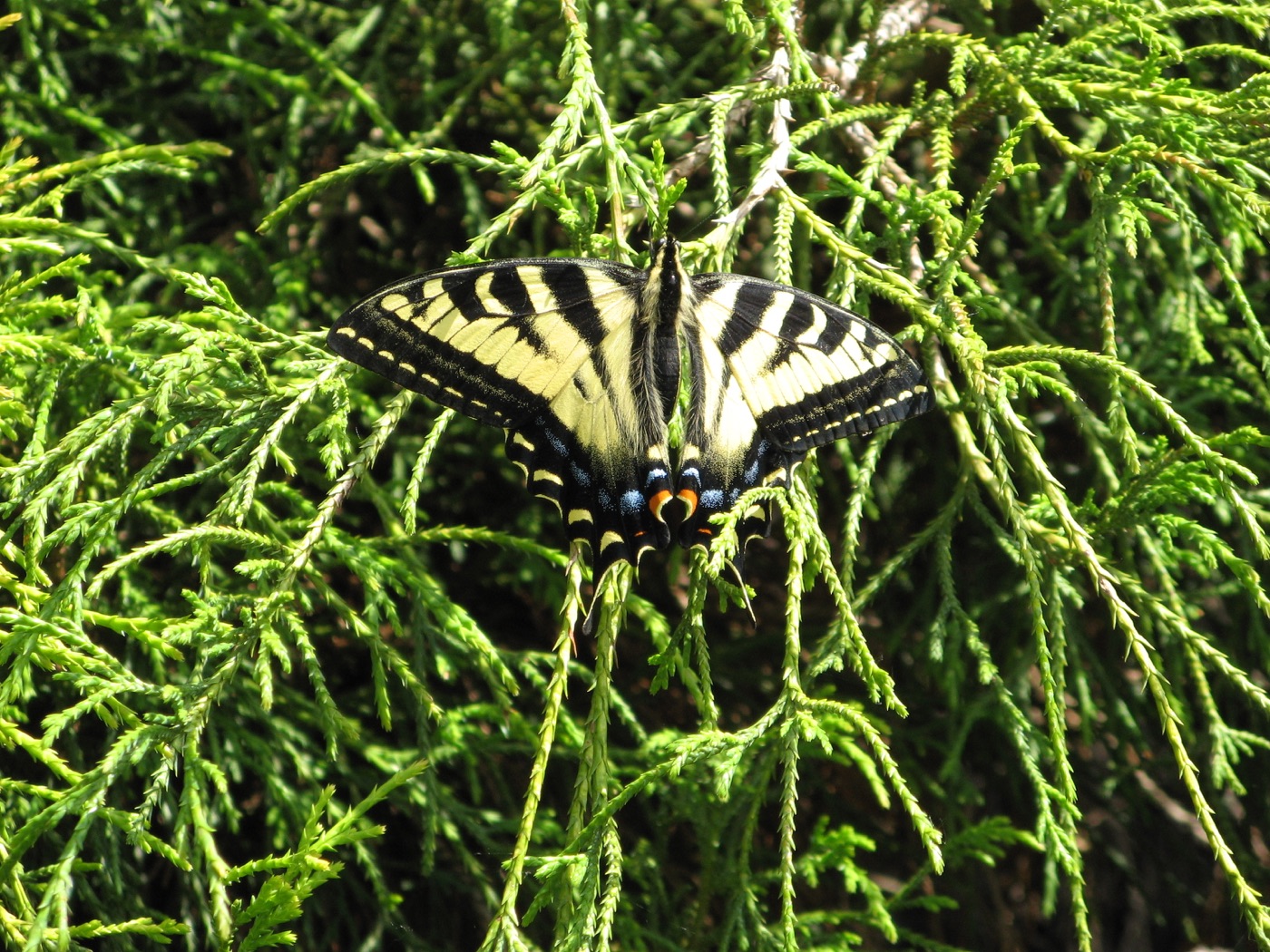
Western tiger swallowtail with open yellow and black striped wings
Photo: Mrpaulin / Wikimedia Commons · Public domain
04

Creeks, canyons & streets

Western tiger swallowtail

Papilio rutulus

One of the easiest large butterflies to notice: yellow wings, bold black tiger stripes, and long tails on the hindwings.

Caterpillar host
Sycamore, willow & cottonwood
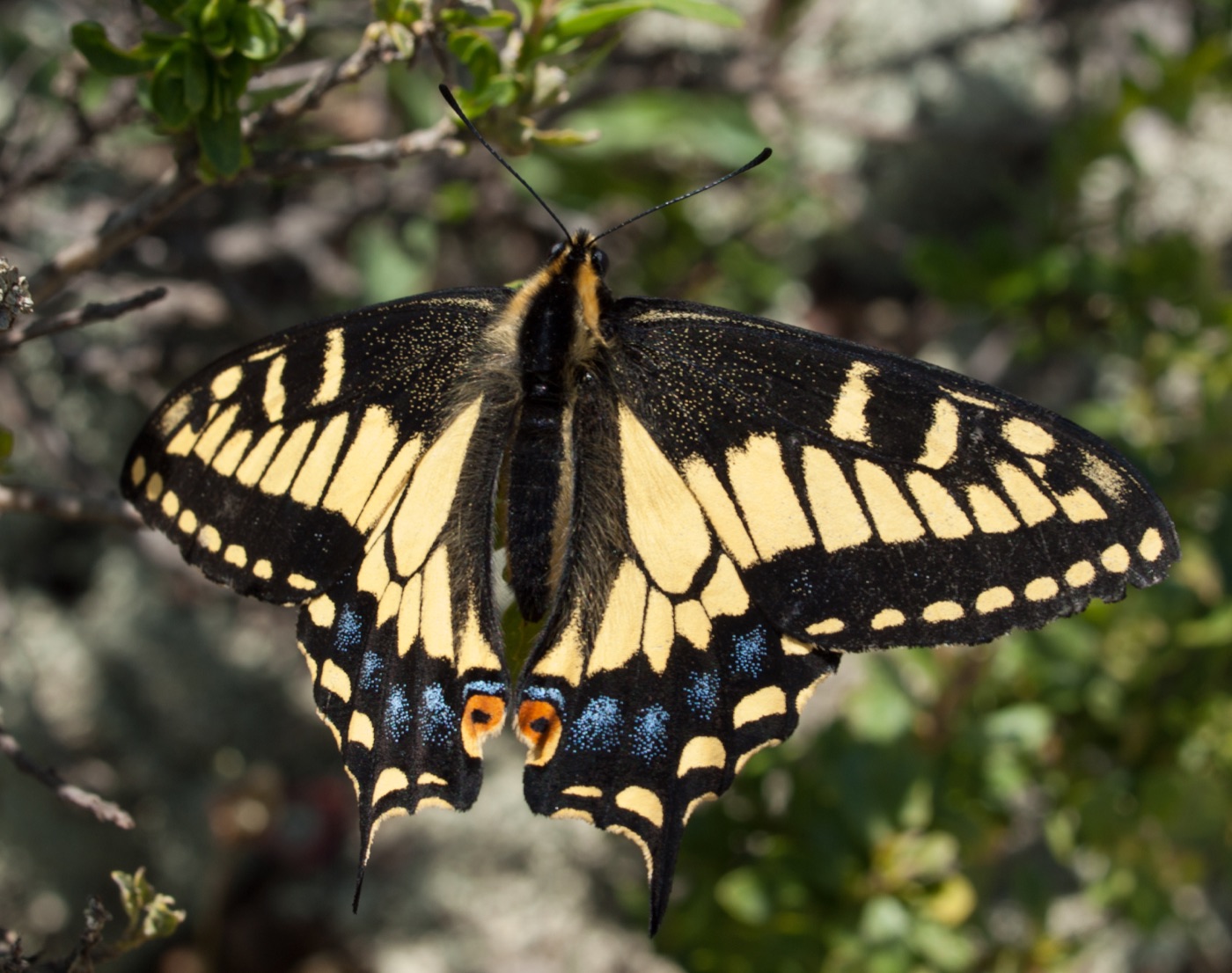
Anise swallowtail with open black and yellow wings and blue accents
Photo: Franco Folini / Wikimedia Commons · CC BY-SA 2.0
05

Hillsides, gardens & fields

Anise swallowtail

Papilio zelicaon

Black wings carry broad yellow bands, blue accents, orange eyespots, and short tails. Compare carefully with other swallowtails.

Caterpillar host
Carrot-family plants
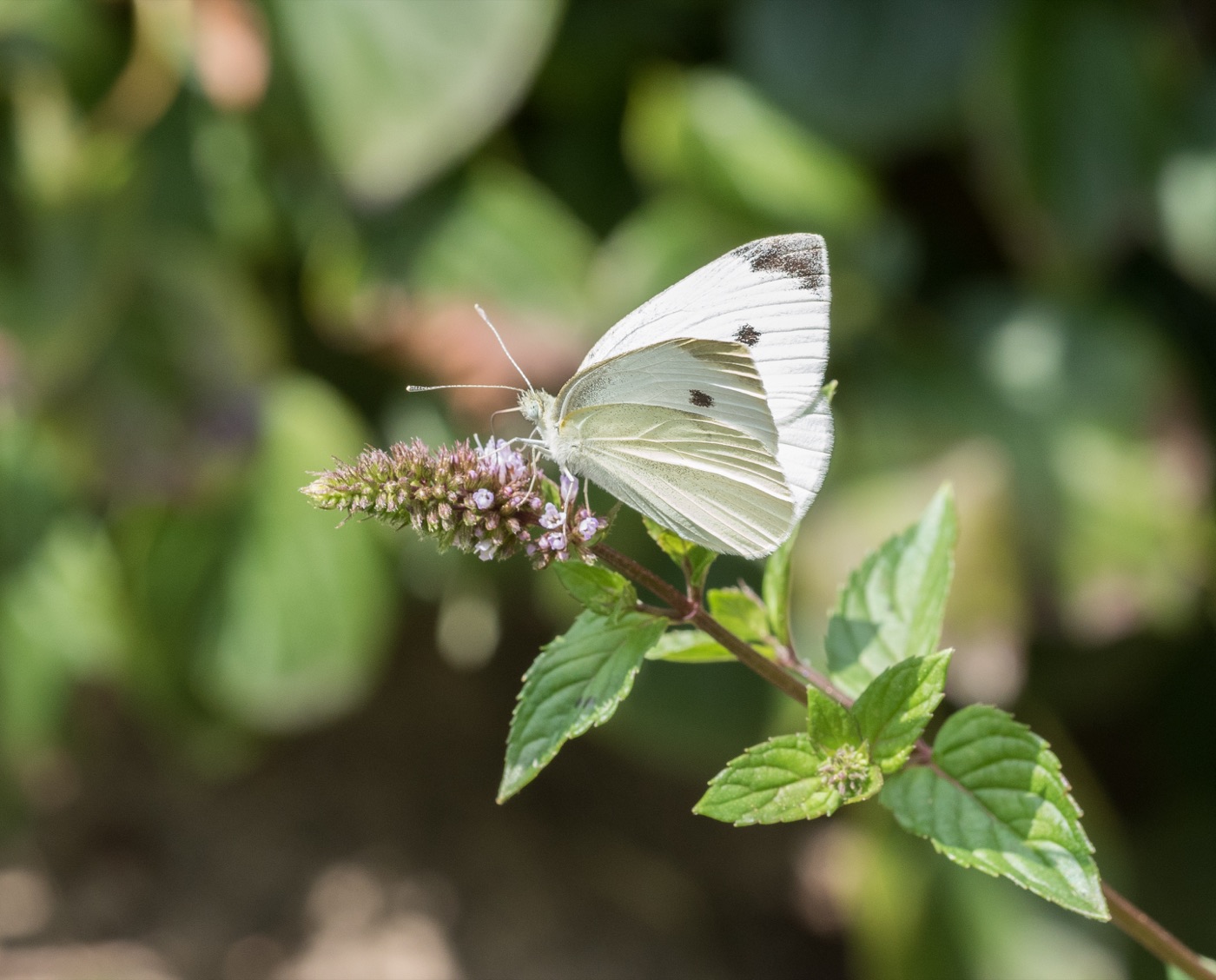
White cabbage butterfly feeding on a small purple flower
Photo: Rhododendrites / Wikimedia Commons · CC BY-SA 4.0
06

Gardens, fields & roadsides

Cabbage white

Pieris rapae

Small white wings with dusky tips and one or two dark spots. Its irregular, bobbing flight is often the first clue.

Caterpillar host
Mustard-family plants
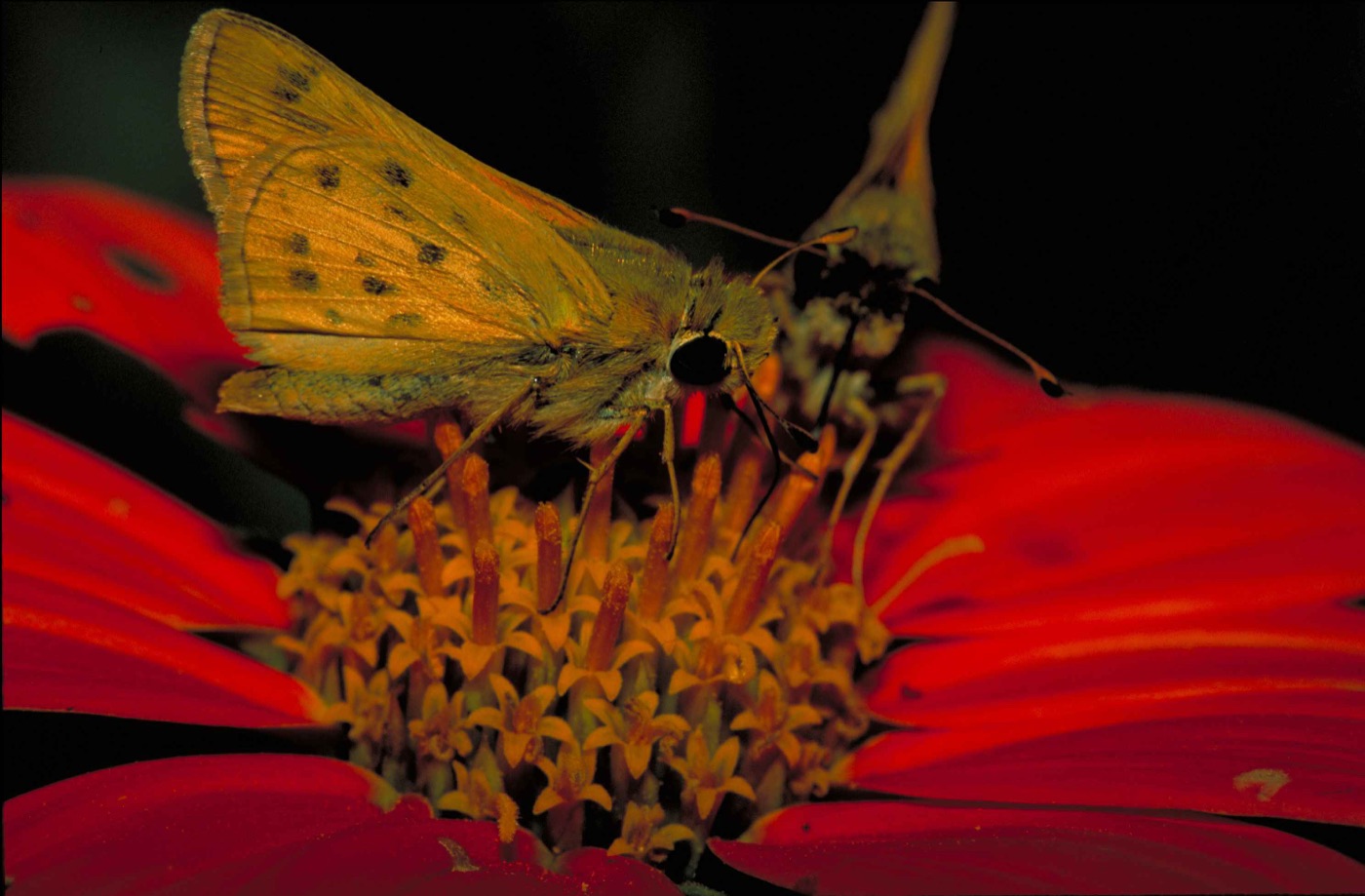
Small golden-orange fiery skipper feeding on a red flower
Photo: Dr. Thomas G. Barnes / USFWS / Wikimedia Commons · Public domain
07

Lawns, gardens & sunny paths

Fiery skipper

Hylephila phyleus

Much smaller than the showy butterflies: warm orange-brown, large-eyed, and quick to dart low between flowers.

Caterpillar host
Grasses
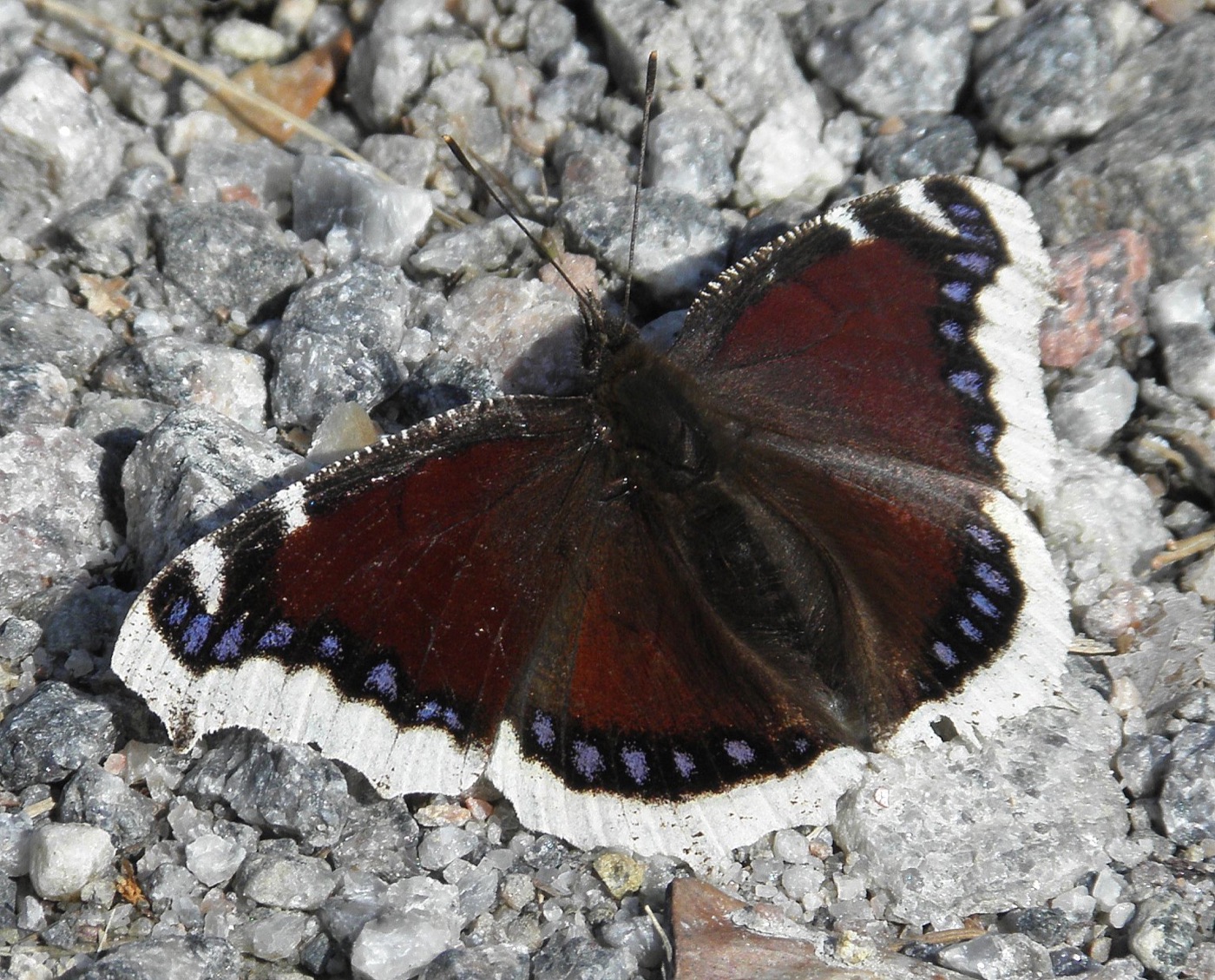
Mourning cloak butterfly spreading dark maroon wings edged with blue and cream
Photo: Billy Lindblom / Wikimedia Commons · CC BY 2.0
08

Woodland edges & canyons

Mourning cloak

Nymphalis antiopa

Deep maroon wings are bordered by blue spots and a broad cream edge. It may bask with wings spread on paths or tree trunks.

Caterpillar host
Willow, cottonwood & elm

Two jobs, often two plants

Host plant ≠ nectar plant.

For the caterpillar

A host plant is where eggs are laid and caterpillars feed. Some species depend on a very narrow group of plants.

For the adult

A nectar plant provides energy to adult butterflies. Lantana can be useful here, even though it is not a local native.

Near the coast

Within roughly five miles of the coast, the City advises focusing on flowering nectar plants rather than planting milkweed, which can disrupt monarchs’ winter rhythm.

Sources & local context

Santa Barbara Museum of Natural History · Central Coast butterflies ↗Butterflies and Moths of North America · Santa Barbara County checklist ↗UC Master Gardeners · Host and nectar plants ↗External links open on the source’s website. Individual species notes remain a preview and should receive a final editorial check before publication.